Cold weather means more layers, but babies can also overheat, especially indoors and during sleep. A layering approach lets you add and remove warmth as conditions change.
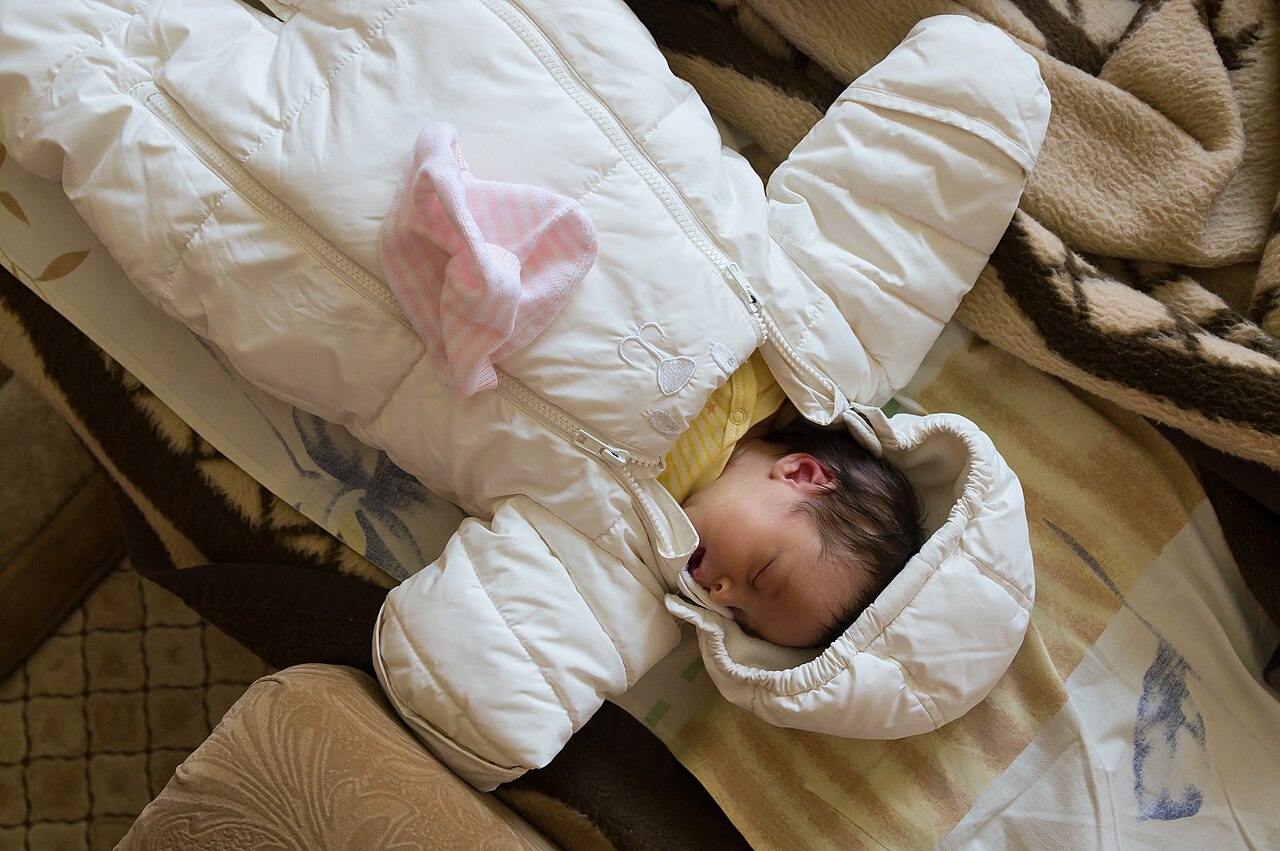

The layering approach
- Base layer: a long-sleeved bodysuit in cotton or merino.
- Middle layer: a sleeper, or trousers and a top, plus a cardigan or fleece.
- Outer layer: a pram suit, snowsuit or coat, with a hat, mittens and warm socks or booties outdoors.
A common rule of thumb is to dress a baby in one more layer than an adult would need to be comfortable in the same conditions. Use it as a starting point and adjust.
Checking warmth
Hands and feet often feel cool even when a baby is warm enough. Feeling the back of the neck or the chest gives a better sense. Sweating, flushed skin or damp hair suggest the baby is too warm. Remove layers when you come indoors or get into a warm car or shop.
Car seats and bulky coats
Thick coats and snowsuits compress in a crash, which can leave car-seat harness straps too loose. Child passenger safety guidance from NHTSA car seat guidance and the AAP recommends thin layers under the harness. Add a blanket or coat over the buckled harness if needed. Check your car seat manual too.
Winter sleep
Indoors, babies don’t need outdoor layers for sleep. Hats are not recommended for indoor sleep, and loose blankets should be kept out of the sleep space. A sleep sack with an appropriate warmth rating (often given as a TOG value) over sleepwear is a common choice. See NIH Safe to Sleep and our article on what babies should wear to sleep.
Outdoors checklist
- Hat that covers the ears
- Mittens and warm socks or booties
- Wind-resistant outer layer
- Spare layer in the bag
- A cover for the pram or stroller in wind or rain, while still allowing airflow
Choosing fabrics for cold weather
Fibre choice affects how warm and dry a baby stays. Merino wool keeps insulating when slightly damp and handles a range of temperatures, which makes it a common base layer in cold climates. Cotton is comfortable and easy to wash, but it holds moisture and feels cold once wet. Fleece is warm and light for mid and outer layers. A wind- and water-resistant shell over a warm layer works better in wet, windy weather than one very thick garment. See our fabric guide for more detail.
Hats, hands and feet
- Hats: babies lose a noticeable amount of heat through the head. Outdoors in cold weather a hat that covers the ears is sensible. Remove it indoors and always for indoor sleep.
- Mittens: thumbless mittens are easier for babies; long cuffs or a cord-free attachment help keep them on. Avoid long strings that could wrap around the neck.
- Feet: warm socks under footed trousers or booties; check that layered socks don’t make booties too tight, which can make feet colder.
- Scarves: generally not recommended for babies because of strangulation and suffocation risk; a snood or a high-necked suit is an alternative for older toddlers under supervision.
Prams, strollers and carriers
In a pram or stroller a baby isn’t moving much, so may need an extra layer compared with being carried. Footmuffs and weather covers help in wind and rain, but leave airflow and check regularly for overheating. A baby carried in a sling or carrier shares body heat with the adult, so may need fewer layers; a carrier cover or the adult’s coat can go over both. Keep the baby’s face visible and the airway clear, following the carrier’s instructions.
Coming indoors
Moving between cold outdoors and warm shops, cars and homes is when babies most often overheat. Unzip or remove outer layers as soon as you are inside, and take off hats. A baby who has fallen asleep in a pram while wrapped up for the outdoors should have layers removed when you come in, even if it risks waking them.
More on car seats
Car-seat guidance is consistent across child passenger safety organisations: dress the baby in thin, close-fitting layers, buckle the harness snugly, then add a blanket or the coat over the harness. Many car-seat technicians suggest a simple “pinch test”: after tightening, you shouldn’t be able to pinch a fold of harness strap at the collarbone. Aftermarket products that go between the baby and the seat, such as thick inserts and bunting bags, may not have been crash-tested with your seat; check your seat’s manual. See NHTSA car seat guidance for current advice.
Signs of being too cold
A baby who is too cold may be fussy, have cool skin on the chest or back of the neck, or seem unusually quiet. Bring them somewhere warm, add layers, and feed if appropriate. Babies who are very cold, unusually floppy or hard to wake need urgent medical attention.
Winter nights at home
Heated homes are often warmer at night than people expect. A room thermometer helps you choose the right sleep sack warmth and sleepwear. Use the recommended temperature range on the sleep sack label, and avoid adding duvets, quilts, pillows or loose blankets, which NIH Safe to Sleep advises against for babies.
This article is general information about clothing, not medical advice. For questions about your baby’s health, skin or sleep, talk to your pediatrician or health visitor.
Discover more from Baby Fashion
Subscribe to get the latest posts sent to your email.