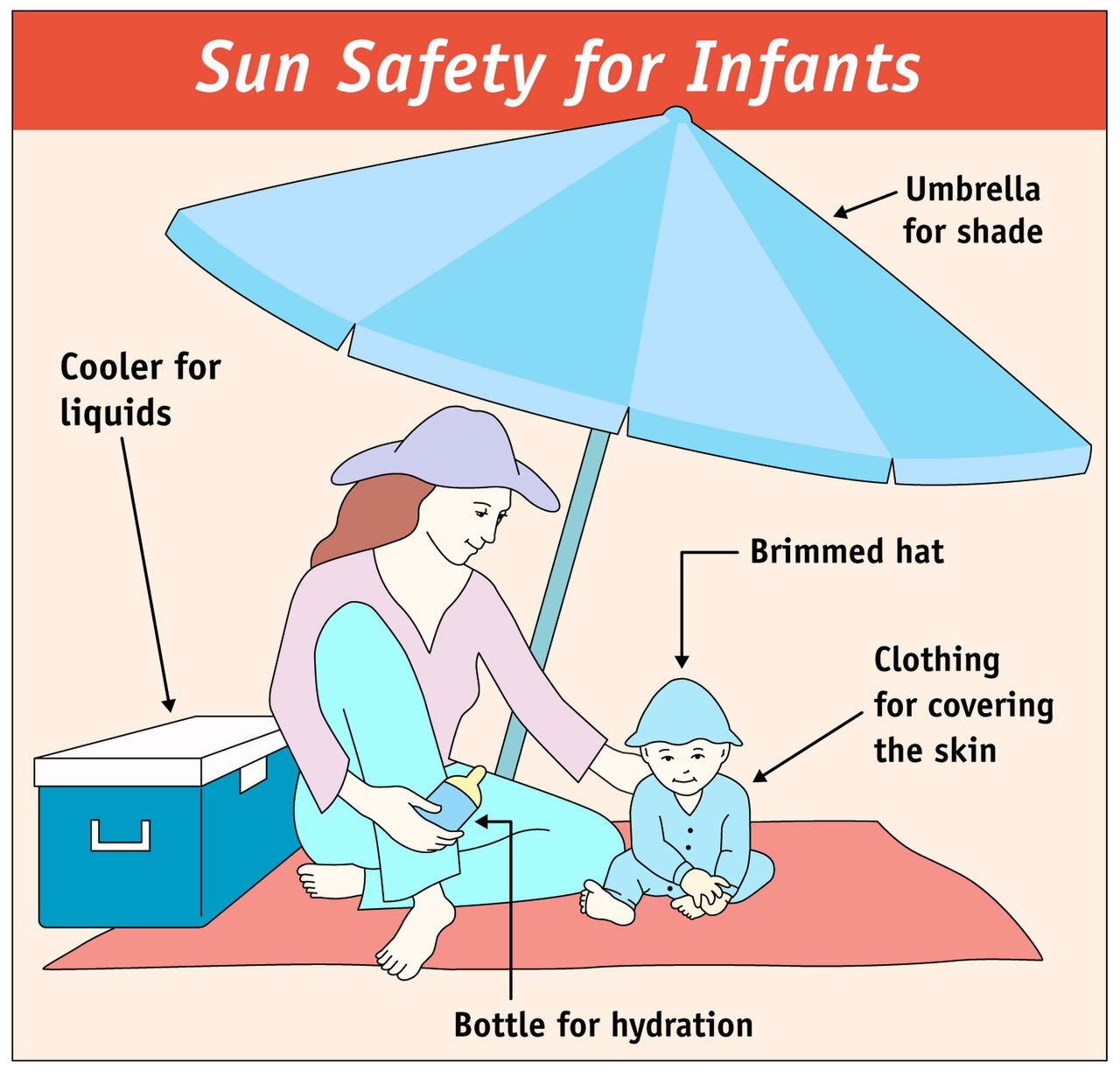
In hot weather the aim is to keep babies cool, covered from the sun and comfortable. Clothing is a big part of that, together with shade and avoiding the hottest part of the day.

Light, loose and breathable
Thin cotton, muslin and linen let heat escape. On very hot days a bodysuit or nappy alone may be enough indoors. Outdoors, lightweight long sleeves and long legs give sun coverage without trapping much heat.
Sun protection through clothing
Babies’ skin burns easily. The FDA advice on sun protection for infants recommends keeping infants under six months out of direct sun where possible, using shade, and covering them with lightweight clothing and a brimmed hat. Ask your pediatrician about sunscreen for young babies. Some garments carry a UPF (ultraviolet protection factor) rating, which tells you how much UV the fabric blocks.
Hats
- Wide brims or legionnaire-style flaps shade the face, ears and neck.
- Breathable fabric and a comfortable fit.
- Chin straps should be breakaway or removed when the baby is unattended or asleep.
Prams and strollers
Avoid draping a blanket or cloth over a pram or stroller to make shade. It can trap heat and reduce airflow. Use the canopy, a purpose-made sunshade that allows airflow, or natural shade instead.
Hot-weather sleep
For sleep in warm rooms, a short-sleeved bodysuit or a lightweight sleep sack is often enough. Keep loose bedding out of the sleep space and follow NIH Safe to Sleep guidance.
Signs of overheating
Flushed skin, sweating, restlessness and fewer wet nappies can be signs a baby is too hot or needs fluids. Move to a cooler place, remove layers, and seek medical advice if you are concerned.
Best fabrics for heat
- Cotton muslin: loosely woven and very breathable; common for swaddle cloths, sleepers and light shirts.
- Lightweight cotton jersey: soft and stretchy for bodysuits.
- Linen: stays cool and dries fast; suits rompers and occasion wear.
- Bamboo viscose: smooth and cool-feeling; may need gentle washing.
- UPF swimwear and rash guards: synthetic fabrics designed to block UV and dry quickly at the beach or pool.
Dark or brightly dyed and tightly woven fabrics generally block more UV than pale, loosely woven ones, but they may also feel warmer. A UPF label removes the guesswork for outdoor clothes. Our fabric guide compares fibres in more detail.
Understanding UPF
UPF (ultraviolet protection factor) measures how much UV radiation passes through a fabric. A UPF 50 fabric lets through about one-fiftieth of UV. Ratings can drop when fabric is stretched or wet, and older, worn garments may protect less. UPF clothing is one layer of protection alongside shade, timing and hats, not a replacement for them.
Timing and shade
UV levels are usually highest in the middle of the day. Many public health agencies suggest planning outdoor time for the morning and late afternoon in summer and checking the local UV index. Trees, umbrellas and covered areas reduce exposure, though UV still reflects off water, sand and pavement. The FDA advice on sun protection for infants focuses on shade and clothing for young infants.
Car travel in heat
Cars heat up quickly in the sun. Dress the baby lightly for car journeys, use window shades that don’t block the driver’s view, and check that car seat buckles and surfaces aren’t hot before putting a baby in. Never leave a child alone in a vehicle, even briefly; NHTSA car seat guidance publishes guidance on preventing heatstroke in cars.
Swimwear and water
- Swim nappies are designed to contain solids, not liquid; many pools require them.
- A long-sleeved rash guard and a sun hat give coverage in and around water.
- Change out of wet swimwear afterwards to keep the baby comfortable.
- Constant, close supervision near water matters far more than any clothing choice.
Indoors when it’s hot
Indoors, fewer layers is usually better on hot days. A bodysuit or just a nappy may be plenty during the day. Fans can help circulate air but shouldn’t blow directly on the baby for long periods, and they should be out of reach. Keep curtains or blinds closed in the hottest part of the day, and offer feeds as advised by your health professional, since babies may want to feed more often in heat.
Packing for a summer day out
- A spare lightweight outfit and a muslin cloth
- A brimmed hat and a backup
- A UPF layer or long-sleeved light top
- Plenty of fluids for the adults and feeds for the baby
- A purpose-made, breathable pram sunshade
Sweat rash and comfort
In hot, humid weather some babies develop small red spots in skin folds and areas covered by clothing. Loose, breathable clothing and avoiding overdressing are simple comfort measures. Any rash that concerns you, or that comes with fever or other symptoms, should be checked by a health professional rather than managed by clothing changes alone.
Hot nights
On very warm nights a nappy and a short-sleeved bodysuit, or a nappy alone under a very light sleep sack, may be enough. Keep the room as cool as you reasonably can, keep loose sheets and blankets out of the sleep space, and check the back of the neck for sweating. Sleep sack labels list a suggested room temperature range for each warmth rating.
This article is general information about clothing, not medical advice. For questions about your baby’s health, skin or sleep, talk to your pediatrician or health visitor.
Discover more from Baby Fashion
Subscribe to get the latest posts sent to your email.