It is easy to buy too many newborn clothes, and just as easy to end up short of the plain basics that get used every day. This checklist covers a realistic starting wardrobe for the first four to six weeks. It assumes you can do laundry every two or three days.
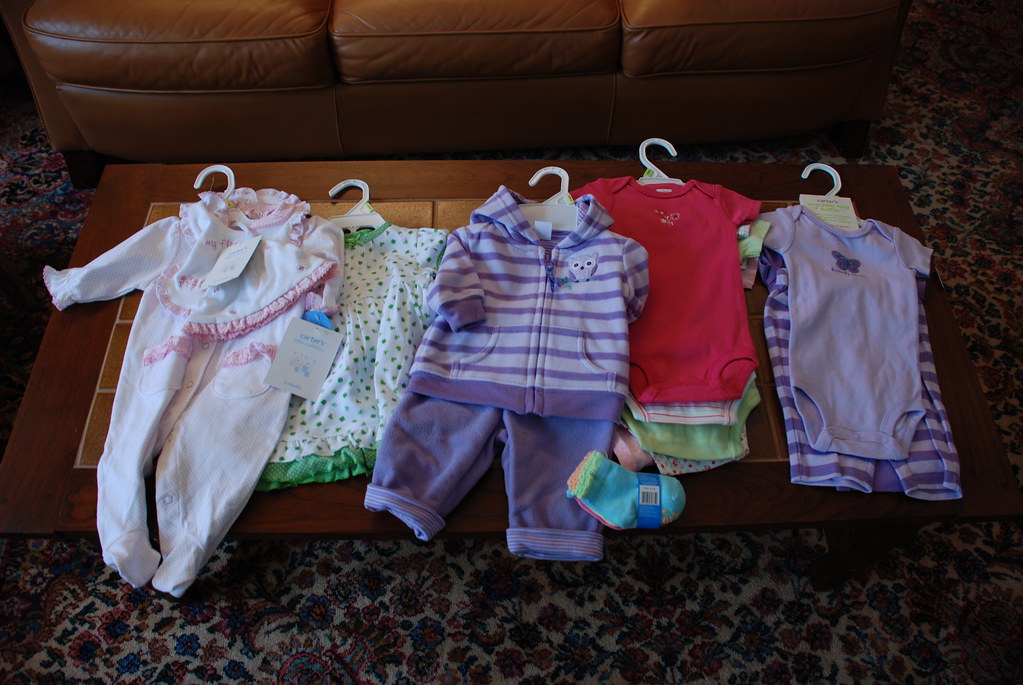

The everyday basics
- Bodysuits, 7–10: short or long sleeve depending on the season. Envelope necklines that pull down over the shoulders make nappy changes after leaks easier.
- Sleepers or footed onesies, 5–7: zip fronts, especially two-way zips, are quicker than rows of snaps at night.
- Trousers or leggings, 3–5: soft waistbands, to wear over bodysuits.
- Socks or booties, 4–6 pairs: they come off often, so simple is better.
- Hats, 1–2: a soft cap for outdoors in cool weather. Hats are not recommended for indoor sleep.
Layers and outerwear
- Cardigans or light jackets, 2–3: easier than pullovers for a baby who dislikes things going over the head.
- One warm outer layer: a pram suit or snowsuit if you live somewhere cold. Note that bulky coats should not be worn under car-seat harnesses (see NHTSA car seat guidance).
- Sleep sacks or wearable blankets, 2–3: in place of loose blankets for sleep, as recommended by NIH Safe to Sleep.
What many parents skip
- Lots of newborn-size items, since some babies outgrow them within weeks.
- Formal outfits with many buttons, which are fiddly for daily wear.
- Shoes before a baby walks. Soft socks or booties are enough.
- Scratch mittens beyond a pair or two, since many sleepers have fold-over cuffs.
Sizes to have ready
A common approach is a handful of newborn-size items and the bulk of the wardrobe in 0–3 months, plus a few 3–6 month pieces for later. See our guide to baby clothing sizes for weight ranges.
Before the first wear
Wash new clothes before use, remove all tags and stickers, and check for loose buttons or threads. Our guide to washing baby clothes covers detergents and settings.
Adjusting for climate and season
The quantities above assume a temperate climate. In a hot climate, swap most of the long-sleeved bodysuits for short-sleeved ones, add a couple of muslin or lightweight cotton sleepers, and focus on sun protection outdoors (see our hot-weather guide). In a cold climate, add long-sleeved base layers, warmer sleepers and one well-fitting outer suit, and read our winter layering guide.
Babies born at the change of a season may need some of both. Rather than buying everything in advance, keep a basic set ready and add items once you see what the weather and your baby actually need.
How laundry affects quantities
The numbers in this checklist are tied to how often you can wash. If you have a washer at home and can run a load every other day, the lower end of each range is usually enough. If you use a shared laundry or a laundrette, or you dry everything on a line in damp weather, aim for the upper end. Newborns can go through several outfits a day because of nappy leaks and spit-up, so a buffer of a few extra bodysuits is common.
Fastenings and features worth looking for
- Envelope or lap shoulders: let you pull a bodysuit down over the body after a leak instead of over the head.
- Two-way zips: open from the bottom for nappy changes without exposing the chest.
- Fold-over cuffs: cover hands to reduce scratching without separate mittens.
- Side-snap (kimono) tops: useful in the first weeks while the umbilical cord stump heals, because nothing presses on it.
- Flat seams and printed labels: fewer things to rub sensitive skin.
Hospital bag clothing
For the trip home from hospital, many families pack two outfits in newborn and 0–3 month sizes, since birth weight is unpredictable. Include a hat for outdoors in cool weather, socks, and a thin layer rather than a bulky coat for the car seat. Bulky clothing under a harness can make it too loose, as NHTSA car seat guidance explains. Some hospitals provide a first set of clothes, so check what yours offers.
Gifts and duplicates
Friends and family often give clothing, and much of it tends to be newborn size or outfits for special occasions. Keeping receipts or tags on until the baby arrives makes exchanges easier. It is also reasonable to ask for specific sizes or basics if people want suggestions.
Storage and organisation
A simple system makes changes faster: sort the drawer by type (bodysuits, sleepers, layers), keep the next size up in a labelled box, and keep a small stock of essentials near where you change nappies. When something is outgrown, move it straight to a storage box so it doesn’t get used by mistake.
Safety checks for new and gifted clothes
Before use, check every item for loose buttons, decorations, ribbons and long threads, and remove cords at the neck. Gift outfits sometimes include accessories, such as headbands or clips, that aren’t suitable for unsupervised wear or sleep. Our clothing safety guide and the U.S. Consumer Product Safety Commission (CPSC) cover what to look for.
A note on budgets
A newborn wardrobe doesn’t need to be expensive. Plain basics in good condition, many of them secondhand or handed down, cover almost everything a baby wears in the first months. Spending on a few well-made sleep sacks and a suitable outer layer for your climate often makes more practical difference than buying special outfits.
This article is general information about clothing, not medical advice. For questions about your baby’s health, skin or sleep, talk to your pediatrician or health visitor.
Discover more from Baby Fashion
Subscribe to get the latest posts sent to your email.